

EPFL’s Gruyère Space Program (GSP) became the first student team in the world to build and fly Colibri, a reusable, liquid-fueled rocket.
With the Chronos 2.1-HD High-Speed Camera, the team overcame challenges across key phases from rocket development to testing.
Colibri completed 53+ flights, reaching 105 meters in altitude and speeds up to 10m/s, with reliable engine reuse and upright landings.
Challenge
The GSP team set out to achieve something unique: design and fly a reusable, autonomously controlled rocket with precision landings. However, building a 100 kg vertical takeoff–vertical landing (VTVL) rocket on a student budget came with a few engineering challenges.
Developing a reusable rocket means mastering events that happen in milliseconds. For GSP, standard video tools simply were not fast enough. Early tests missed critical data, presenting challenges in the following areas:
- Ignition sequence tuning
- Combustion chamber cooling
- Propellant phase management
- Injector performance
- Touchdown dynamics
Most of these processes were too fast to see and too critical to ignore.
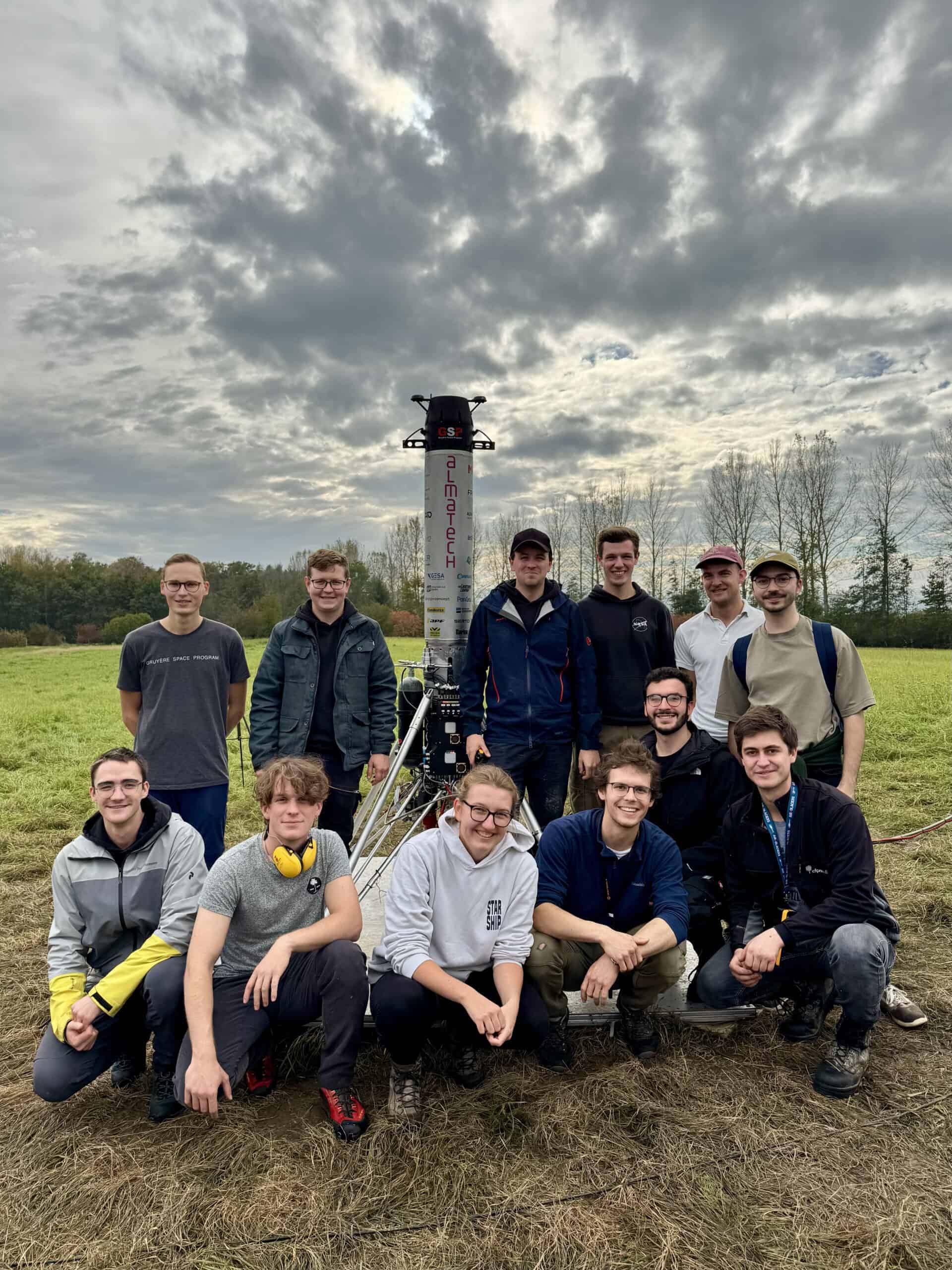

“The detailed frame-by-frame analysis provided by the high-speed footage proved critical in fine-tuning the propulsion system, solving ignition issues, and validating the design for repeated rocket reuse.”
Jérémy Marciacq
GSP Co-founder
Solution
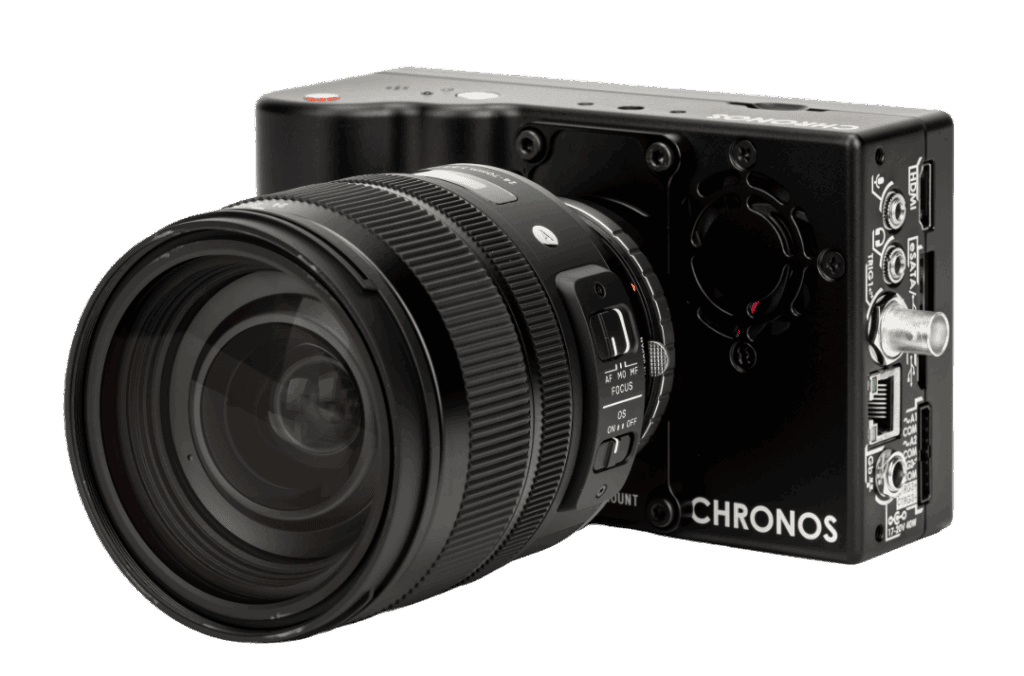
That’s where the Chronos 2.1-HD High-Speed Camera came in. Capable of up to 1,000 FPS at 1920x1080 (HD) resolution, the camera revealed key, frame-by-frame moments.
Here is a glimpse of how the Chronos 2.1-HD helped the GSP team:
Improve Engine Performance:
Achieved the team’s first fuel closed-loop control to check for sufficient combustion at different thrust levels, which served as an imperative step for assessing engine reliability and performance.
Thoroughly Understand Propellant Injection:
Provided valuable footage of cold flow injector tests to assess spray patterns and phase change. This is crucial to optimizing engine efficiency.
Enhance Flight, Touchdown, and Throttle Control:
As seen in the video below, the Chronos 2.1-HD high-speed camera enabled frame-by-frame analysis of landing sequences and provided feedback on engine behavior, allowing the team to view the exact moment of engine ignition and the release of the umbilical cord, as well as ensure safe, straight landings.

Summary
At EPFL in Switzerland, the Gruyère Space Program did the unthinkable: design, build, and land a rocket that could take off and touch down vertically. To get there, they needed equipment to discover and analyze fast-moving challenges clearly and refine their project.
The Chronos 2.1-HD High-Speed Camera enabled the team to identify anomalies and improve processes throughout the rocket's development, design, and testing phases, proving that outstanding results don’t always require high-priced camera budgets. With over 53 successful flights and a full transition into a professional aerospace company, the Gruyère Space Program (GSP) shows what’s possible when student teams are given the right tools.

Successful Flight - Colibri ascends 105 meters in just 60 seconds and lands safely.
If you’re working in aerospace, R&D, or any high-speed application, Chronos high-speed cameras let you slow time down so you can move your project forward with confidence.
Share
About
Industry: Aerospace & Research
Team: Gruyère Space Program (EPFL, Switzerland)
Camera: Chronos 2.1-HD High-Speed Camera
Industry
Applications

More Case Studies

Fluid Dynamics


SaaS
Kron Technologies Streamlines Sales with Katana and WooCommerce
Kron Technologies is the manufacturer of high-speed cameras and uses seamless Katana and WooCommerce integration to streamline…
Research
Plasma Research University of Saskatchewan
Case Highlights: Customer: University of Saskatchewan Use Case: Research & Development Needs: Observe plasma spokes Challenge: Observing…